

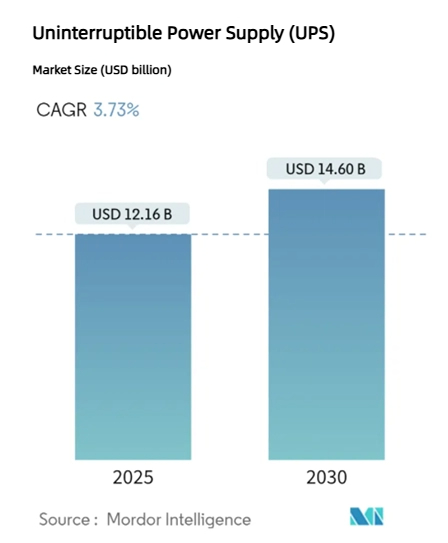
The global uninterruptible power supply (UPS) market is expected to grow from $12.16 billion in 2025 to $14.6 billion by 2030, at a compound annual growth rate (CAGR) of 3.73%. This growth is driven by increased demand for reliable power solutions in various industries, including telecom, healthcare, and data centers.
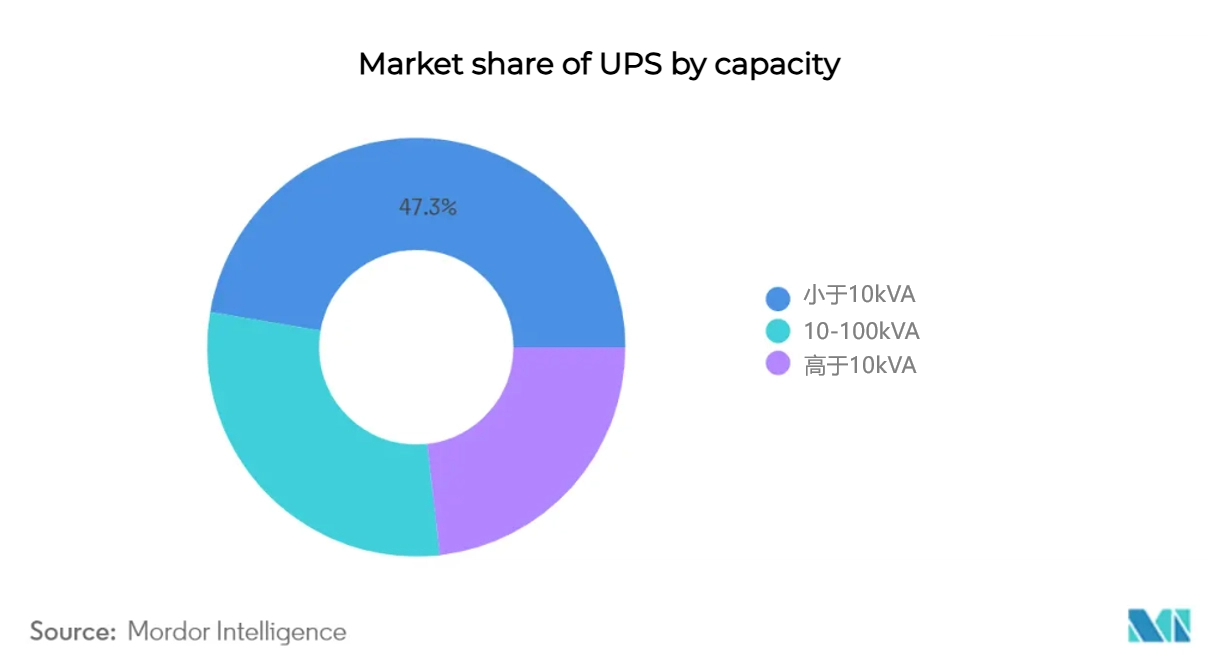
Segment Analysis by Capacity:
Under 10 kVA:
This segment will dominate the market, holding about 47% of the market share in 2024. It is largely driven by the adoption of UPS systems in home electronics, such as computers, and smaller consumer products like CCTV cameras, medical equipment, and smart home devices. The Asia-Pacific region, with its growing population and increasing demand for high-quality electronics, is a major driver of this segment.
10-100 kVA:
Expected to grow rapidly during the forecast period (2024-2029), the 10-100 kVA segment is essential for retail networks, supermarkets, and critical infrastructure. It is especially important in healthcare facilities, where it supports life-support systems, medical IT equipment, and imaging devices. Additionally, it plays a key role in transportation, where it is used to maintain power in traffic signal systems and smart traffic management solutions.
Above 100 kVA:
This segment serves critical applications in telecom, IT industries, and large-scale industrial settings, including power plants, oil rigs, and chemical factories. Systems in this category are designed to withstand extreme conditions and high temperatures, making them suitable for industries that require continuous power, such as nuclear power plants and pharmaceutical manufacturing.
Geographical Market Breakdown:
North America:
North America accounts for approximately 23% of the global UPS market, with the United States having the largest concentration of data centers in the world. The demand for UPS solutions is driven by sectors requiring continuous power, particularly those located in areas prone to natural disasters or electrical grid failures. There is also a growing focus on energy efficiency and the implementation of smart grids, further bolstering the demand for advanced UPS systems.
Europe:
The European market is experiencing stable growth, with a CAGR of around 2% from 2019 to 2024. This growth is fueled by the region's emphasis on energy efficiency and the shift toward renewable energy. The expansion of digital infrastructure and industries, especially manufacturing, healthcare, and finance, is driving the need for UPS systems. In addition, Europe’s commitment to sustainability and its stringent energy regulations are accelerating the adoption of energy-efficient UPS solutions.
Asia-Pacific:
Asia-Pacific is poised to be the fastest-growing region for UPS systems, with an expected CAGR of 5% from 2024 to 2029. The rapid industrialization and expanding digital infrastructure, particularly in China, India, and Southeast Asia, are key factors driving this growth. As cloud computing and data center investments increase, so does the demand for reliable power backup systems. Additionally, the expanding telecom sector and the ongoing deployment of 5G networks are contributing to the surge in UPS adoption in this region.
South America:
The industrial UPS market in South America is growing steadily, driven by the ongoing digitalization efforts and increased investment in data centers, particularly in Brazil and Argentina. The expanding manufacturing sector and the increasing reliance on cloud services are fueling the demand for UPS systems. The need for improved power grid reliability and the modernization of healthcare infrastructure are also contributing to the market's growth.
Middle East & Africa:
The Middle East and Africa are seeing significant potential for UPS systems due to rapid infrastructure development and the increasing need for reliable power solutions. Investments in data centers, healthcare, and industrial applications are driving the demand for UPS systems. The region’s growing interest in smart cities and digital transformation initiatives is expected to further boost the adoption of UPS solutions.