

When it comes to selecting an Uninterruptible Power Supply (UPS) system for your facility, one of the most critical decisions you will face is whether to opt for a single-phase or a three-phase UPS. Both types have their unique advantages and are suited to different applications. Here’s a comprehensive guide to help you make the right choice.
Understanding the Basics
Single-Phase UPS
- - Power Capacity: Typically, single phase UPS systems are designed for lower power capacities, often ranging from a few hundred watts to around 10kVA. They are ideal for small to medium-sized applications such as individual workstations, small servers, or home offices.
- - Efficiency: While they are generally less efficient than their three phase UPS, single-phase UPS units are more cost-effective and easier to install. They are also more compact, making them suitable for environments with limited space.
- - Common Applications: Single-phase UPS systems are commonly used in residential settings, small businesses, and in scenarios where the power requirements are relatively low.
UnitronicPower thoughtfully launches several single-phase UPS with a maximum capacity of 20kva, UN11 Series High Frequency Online UPS (15/20kVA), UNR11 Series High Frequency Online UPS (15/20kVA).
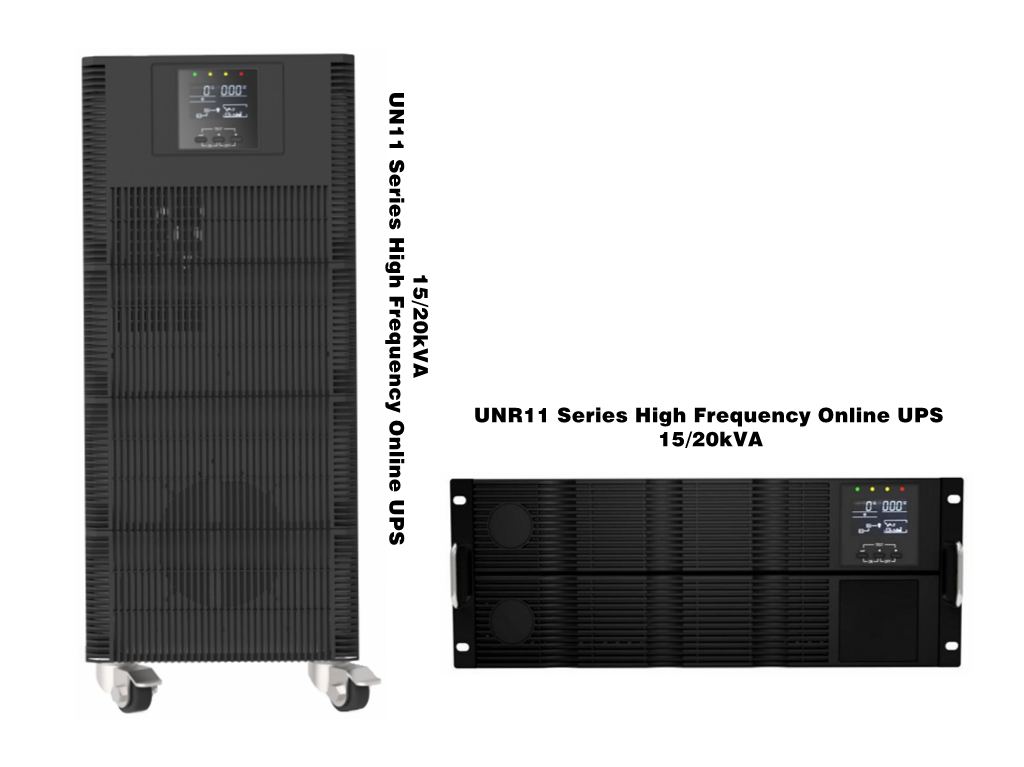
Both the UN11 Series (Tower) and UNR11 Series (Rack-Mounted) high-frequency online UPS systems provide powerful power protection solutions with optional capacities of 15kVA/15kW and 20kVA/20kW. They use true online double conversion technology to ensure stable and pure sine wave output with a power factor of up to 1. Both series support a wide voltage input range (95Vac to 300Vac) and advanced PFC technology, with an input power factor of over 99%.
Three-Phase UPS
- - Power Capacity: Three-phase UPS systems are designed to handle higher power loads, typically ranging from 10kVA and above. They are essential for large data centers, industrial facilities, and other environments where multiple devices require simultaneous power support.
- - Efficiency: Three-phase UPS units are more efficient, especially when dealing with high power demands. They distribute the load evenly across three phases, reducing the risk of overloading and improving overall power quality.
- - Common Applications: These systems are ideal for large-scale operations, such as data centers, hospitals, and manufacturing plants, where reliability and efficiency are paramount.
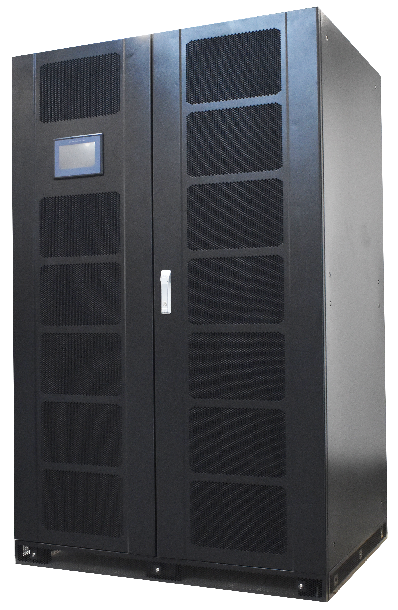
UnitronicPower three-phase low frequency UPS has a maximum capacity of up to 400kva. Take UNG33 Series Low Frequency Online UPS as an example. supports automatic identification of 380/400/415V, 50/60Hz grids, has a wide input voltage range, and provides intelligent battery management to extend battery life. It also includes an LCD interface for user-friendly operation, supports parallel operation of different power models, and offers comprehensive fault code prompts.
Key Considerations for Selection
1. Power Requirements
- Load Size: Assess the total power consumption of your equipment. If your load is below 10kVA, a single-phase UPS might be sufficient. For higher loads, a three-phase UPS is necessary.
- Future Expansion: Consider your future power needs. Investing in a three-phase UPS might be more cost-effective in the long run if you anticipate significant growth in your power requirements.
2. Efficiency and Reliability
- Efficiency: Three-phase UPS systems are generally more efficient, especially at higher loads. This can lead to significant cost savings in terms of energy consumption over time.
- Reliability: Three-phase systems offer better redundancy and reliability, which is crucial for critical applications such as data centers and hospitals.

3. Cost and Installation
- Upfront Costs: Single-phase UPS systems are usually cheaper to purchase and install. However, if your power needs exceed their capacity, the cost savings may be offset by the need for multiple units.
- Installation Complexity: Single-phase systems are easier to install and require less infrastructure. Three-phase systems, on the other hand, require more complex wiring and may need professional installation.
4. Space Constraints
- Footprint: Single-phase UPS units are generally more compact and can fit into smaller spaces. Three-phase systems, due to their higher capacity, are often larger and require more room.
Practical Tips
- - Consult an Expert: Before making a decision, consult with a UnitronicPower power system expert who can assess your specific needs and recommend the best solution.
- - Evaluate Power Quality: Consider the quality of your incoming power supply. Poor power quality may necessitate a more robust UPS system.
- Maintenance and Support: Ensure that the UPS system you choose comes with comprehensive maintenance and support services to minimize downtime.
Conclusion
Choosing between a single-phase and a three-phase UPS system depends on your specific power requirements, budget, and operational environment. By carefully evaluating your needs and considering the factors outlined above, you can make an informed decision that ensures reliable power protection for your critical equipment.
Tags: #PowerProtection #UPSSelection #SinglePhaseUPS #ThreePhaseUPS #DataCenter #PowerReliability#UnitronicPower